Planning · 9 min read
Best Time to Go on Safari in Tanzania: Month by Month
There is no bad month for a Tanzania safari — only months that suit different travellers. Here is what each one actually looks like on the ground.
The short answerThe best time to go on safari in Tanzania is late June to October — dry weather, thin bush and easy game viewing, with the Mara River crossings from July. For predators and newborn wildebeest go late January to early March; for the lowest prices and empty parks go April, May or November. The Ngorongoro Crater is excellent in every month of the year.
This is the question we are asked more than any other, and the honest answer is that Tanzania is a year-round safari destination. What changes month to month is where the wildebeest are, how thick the vegetation is, how many other vehicles you share a sighting with, and how much the whole trip costs.
Below is the year as we experience it, driving the northern circuit out of Arusha every week.
The short answer
- ·Best overall: late June to October — dry, easy game viewing, Mara River crossings.
- ·Best for predators and newborn wildebeest: late January to early March, at Ndutu.
- ·Best value and fewest people: April, May and November.
- ·Best for photography: the green months of November to March, with dramatic skies.
January to March — calving season on the southern plains
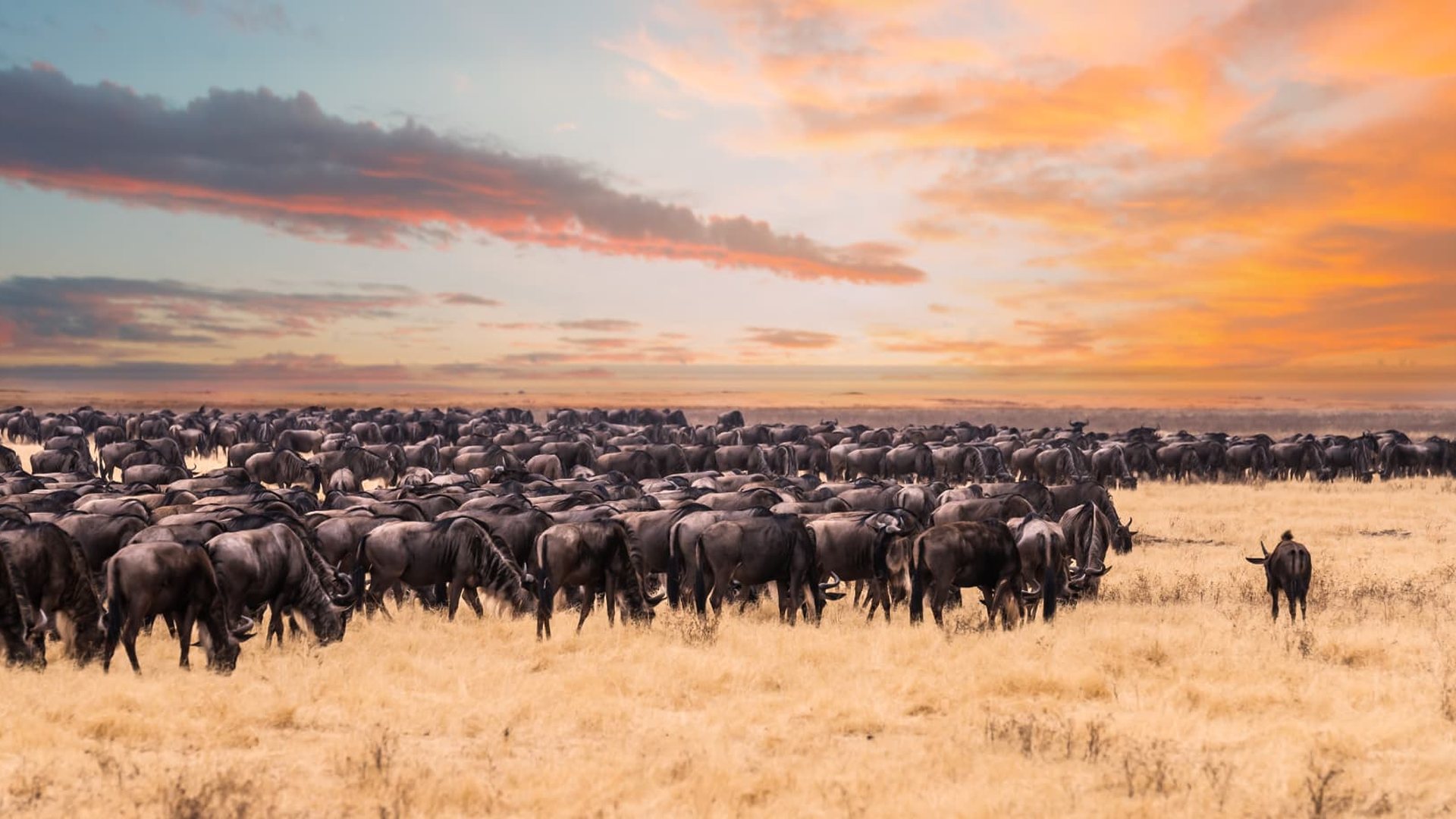
Around 1.5 million wildebeest gather on the short-grass plains around Ndutu, and from late January roughly 8,000 calves are born every day. Where there are newborns there are predators, so this is the strongest period of the year for lion, cheetah and hyena sightings.
The landscape is green, the light is superb, and although the Serengeti is busy, the northern parks are calmer than in August.
April and May — the long rains
These are the wettest months. Some seasonal camps close, black-cotton tracks get sticky, and game is more scattered because water is everywhere. In exchange you get the lowest prices of the year, almost empty parks, and a landscape that looks nothing like the dusty photographs everyone else brings home.
If your budget matters more than guaranteed sunshine, late May is one of the smartest bookings on the calendar — the rain is easing and the Grumeti columns are forming.
June to October — the dry season
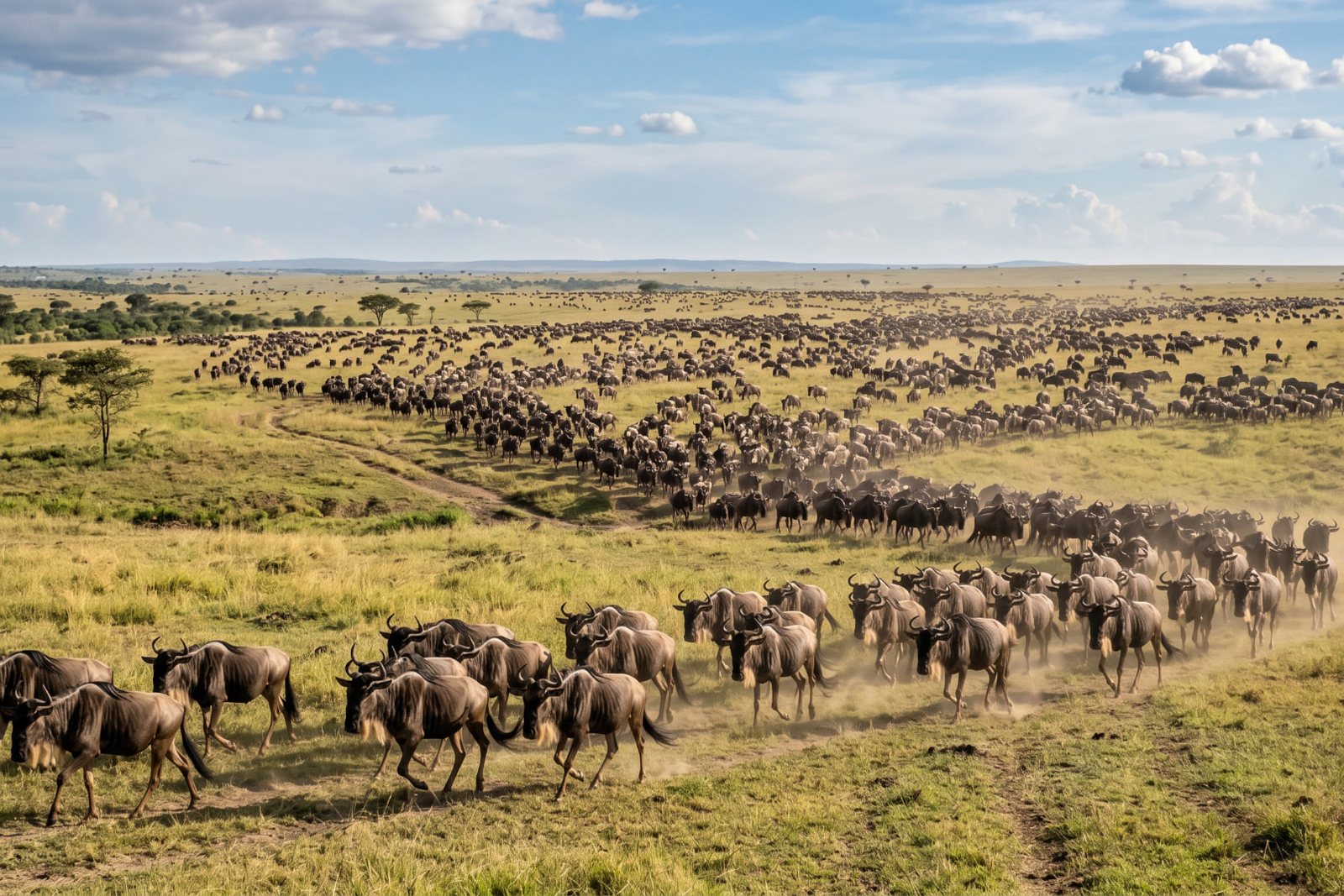
The bush thins out, animals concentrate on permanent water, and spotting becomes easy. June brings the Grumeti crossings in the western Serengeti; from July to October the herds are in the far north on the Mara River, where the famous crossings happen.
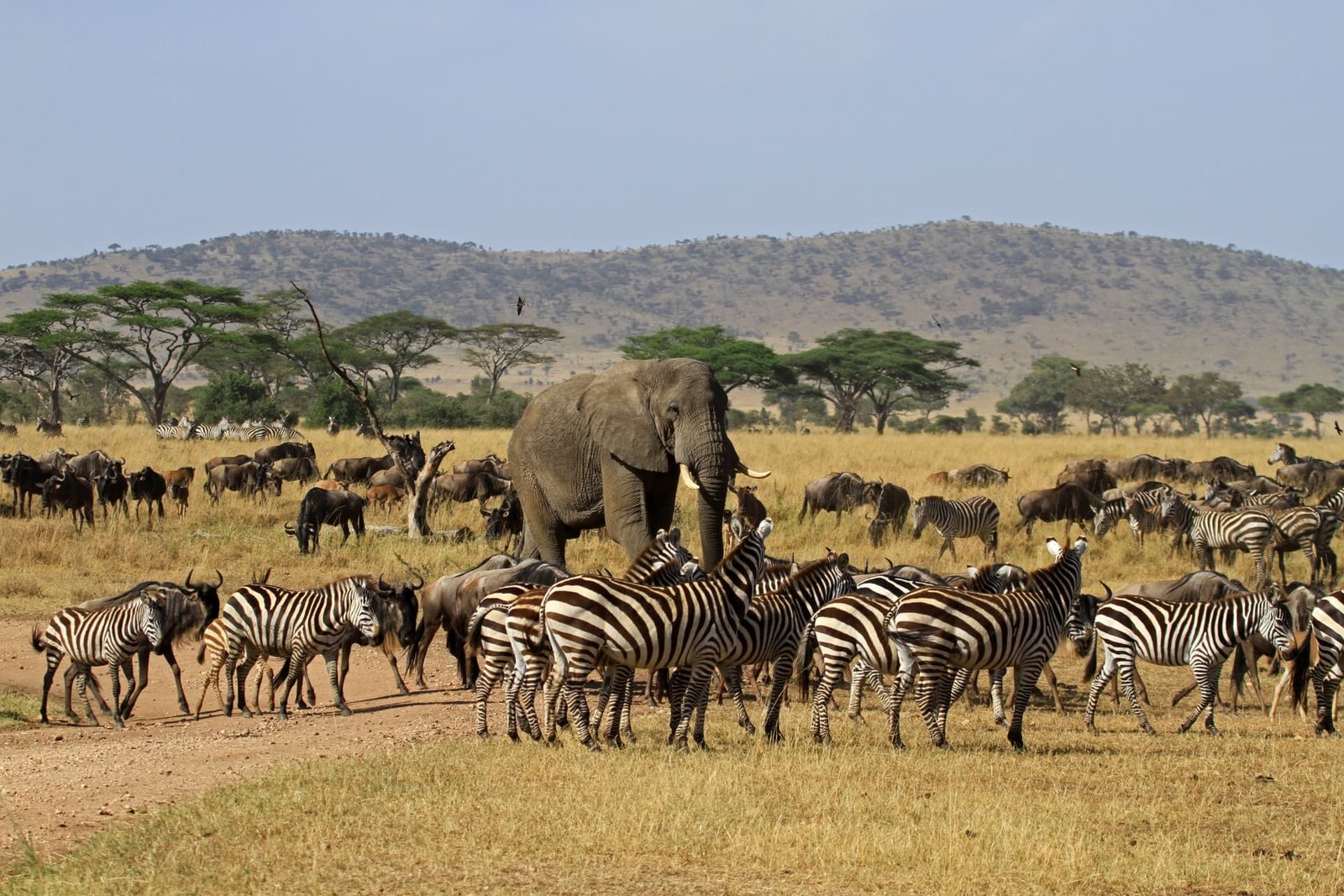
Tarangire is at its best in these months too — the river becomes the only water for miles and elephant herds of a hundred or more gather along it.
The trade-off is people and price. July to September is peak season, and Serengeti camps sell out six to nine months ahead.
November and December — the short rains
Short afternoon showers settle the dust and green everything up within days. The herds sweep south through the central Serengeti and migrant birds arrive in huge numbers. Crowds thin out and prices fall until the festive period begins around 20 December.
What about the crater?
The Ngorongoro Crater is the exception to all of the above. Its wildlife is resident and does not migrate, so it delivers in every single month of the year. If your dates are fixed and awkward, build the trip around the crater.

About the author
Isaac Sumary
Isaac is a Tanzanian safari guide from Arusha and the founder of both the Fruitful Orphanage & Day Care Center and Fruits & Love Safaris. He has been driving the northern circuit for over a decade, and 10% of every safari payment goes back to the children in his care. Reach him on +255 762 353 576 or isaacsumary@yahoo.com.
Planning a trip?
We run private safaris from Arusha and give 10% of every payment to the Fruitful Orphanage. Send us your dates and we will reply within 24 hours with a quote in USD.
Get a quote