Planning · 8 min read
Best Time to Visit the Serengeti, Month by Month
There is no closed season in the Serengeti — only different parks within the same park. Pick your month by what you want to see.
The short answerThe best time to visit the Serengeti is late June to October for dry-season game viewing and the Mara River crossings, or late January to early March for the wildebeest calving and peak predator action at Ndutu. April, May and November are the cheapest and quietest months, with green landscapes and excellent photography.
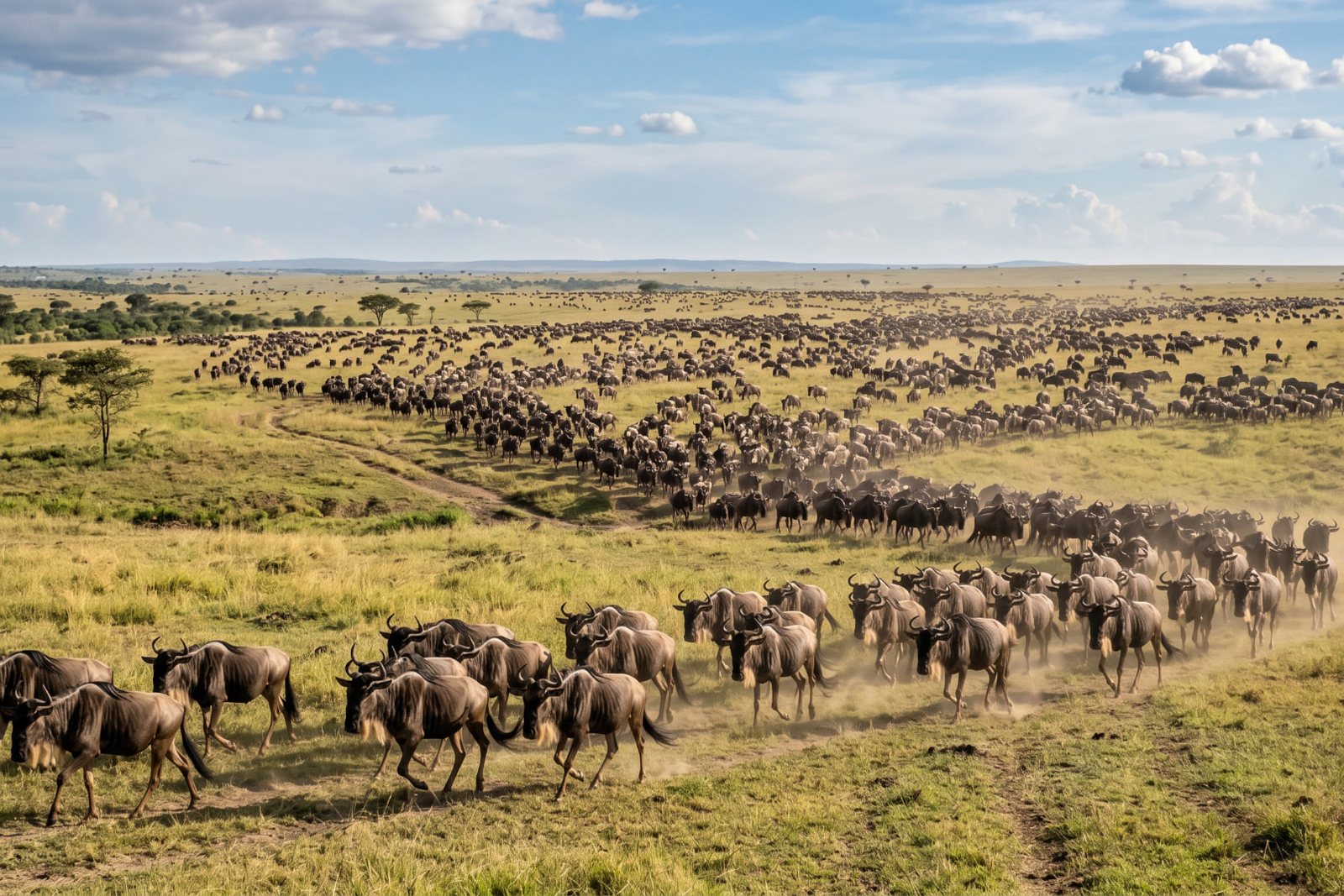
The Serengeti is 14,750 km², so "when should I go" really means "which part should I be in when". The migration decides that, and it moves in a predictable loop that our guides follow all year.
December to March — the southern plains and calving
The herds are on the short-grass plains around Ndutu and the southern Serengeti. From late January roughly 8,000 calves are born every day, and the predators know it. This is the strongest window of the year for lion, cheetah and hyena action, and the open plains make it easy to watch a hunt develop from a distance.
Skies are dramatic, the grass is green, and the light in the hour after sunrise is the best of the year for photography.
April and May — the long rains
The wettest months. Some seasonal camps close, tracks get sticky and the herds start moving north-west. In exchange you get the lowest prices, near-empty parks and a landscape nothing like the dusty August photographs. If value matters more than guaranteed sun, late May is one of the smartest bookings on the calendar.
June — the Grumeti crossings
The rains ease, the columns form and the herds push into the western corridor towards the Grumeti River, where enormous crocodiles wait. It is less famous than the Mara crossings and far less crowded, and June is the sweet spot between low-season prices and dry-season conditions.
July to October — the north and the Mara River
Peak season. The bush is thin, water is scarce and animals concentrate, so general game viewing across the whole park is at its easiest. The herds are in the far north, and the Mara River crossings happen somewhere between late July and October.
Two caveats: crossings are unpredictable — herds can wait days at the bank — so give the north at least two nights; and camps in the northern Serengeti sell out six to nine months ahead.
November — the short rains and the move south
Short afternoon showers green everything within days and the herds sweep back south through the central Serengeti. Migrant birds arrive in huge numbers, crowds thin and prices drop until the festive period begins around 20 December. November is our quiet favourite.
If your dates are fixed
Then build the trip around the Ngorongoro Crater and Tarangire, which deliver in every month, and give the Serengeti whichever region suits your dates. On a five-day trip we place your Serengeti nights where the herds actually are when you travel, rather than following a fixed template.

About the author
Isaac Sumary
Isaac is a Tanzanian safari guide from Arusha and the founder of both the Fruitful Orphanage & Day Care Center and Fruits & Love Safaris. He has been driving the northern circuit for over a decade, and 10% of every safari payment goes back to the children in his care. Reach him on +255 762 353 576 or isaacsumary@yahoo.com.
Planning a trip?
We run private safaris from Arusha and give 10% of every payment to the Fruitful Orphanage. Send us your dates and we will reply within 24 hours with a quote in USD.
Get a quote